





4.9
Paid
Chinese Frontiers
Carve mountains and raise stone walls to the sky


Safe & trusted downloads
The best software, verified by experts
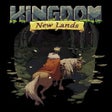
<h2>Kingdom: New Lands blends sparse strategy with consequence-driven play</h2>
Kingdom: New Lands, from Noio, casts you as a monarch on horseback charged with growing and defending a fragile realm. The game centers on managing a tight gold economy, assigning coins to recruit subjects and fund defenses, and steering daily choices that determine survival through nightly attacks. Its design emphasizes discovery over instruction, making it suitable for strategy players who prefer experiment-led, roguelike-tinged challenges. Available on Windows and other platforms.
So you ride a monarch across a horizontal map where night brings the Greed and daytime becomes a series of micro-decisions that shape survival. The loop asks you to explore, collect coins, and work toward repairing a ship that unlocks successive islands, five in total. Procedural generation alters island geometry and resource placement, which forces different settlement choices and defensive priorities each run.
Thus the title expects players to learn by doing: there is no explicit tutorial and many systems reveal themselves through use. Losing the crown to the Greed triggers an immediate Game Over, while certain unlocks carry forward between attempts, creating a roguelike cadence. Statues, mounts, and NPC functions must be discovered through experimentation, which rewards curiosity but can leave newcomers without clear early direction.
The game leans on escalating goals and mystery to invite replay. Randomized maps plus a campaign of increasingly difficult islands change pacing across runs, and persistent unlocks introduce new tactical options over time. Recruitment converts wandering vagrants into specialists when you supply a tool, producing small, consequential choices about defense, economy, and expansion that influence later attempts.
The presentation combines detailed pixel art with dynamic lighting to make tiny settlements feel lived-in, and the soundtrack favors sparse, mood-driven cues that amplify nocturnal danger. The interface keeps HUD elements limited so screens stay focused. On Windows the game runs on modest hardware: a dual-core CPU, about 1 GB of storage, and 1 GB of RAM required, with 4 GB recommended for smoother sessions.
Kingdom is a rewarding choice for players who prefer deducing systems through play and accept minimal instruction; its design privileges methodical decision-making over hand-holding. That emphasis creates satisfying moments of mastery but raises the barrier for those who expect explicit guidance. Players willing to tolerate a steeper entry that prizes discovery will find long-term engagement; others may prefer titles that explain mechanics up front.
Paid
Carve mountains and raise stone walls to the sky
Paid
Engaging City-Building Simulation Game

Paid
Barotrauma: Home & Harbor expands submarine play into base governance

Paid
Explore and Catalog Creatures in Bestiary

Paid
Timberborn: Beavers, Water Engineering, and City-Building
Paid
Design and Defend Your Medieval Keep with Bergfried