

Whats in Space for Android
<h2>Whats in Space? An illustrated astronomy app for preschool learners</h2>
- Free
- 4.9
- 7
- V 3.4.8
<h2>Whats in Space? An illustrated astronomy app for preschool learners</h2>
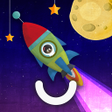
Whats in Space? by Learny Land introduces children to basic astronomy through play, visual storytelling, and narrated lessons. The app lets preschoolers explore the solar system, identify constellations, and learn about the International Space Station using hand-drawn illustrations and mini-games that remove timers and scoring. Full voice narration supports non-readers while stargazing and rocket-building activities create gentle, exploratory sessions. Designed for ages 4 to 8, it gives parents and early educators a safe, ad-free learning resource for home or classroom use.
What the app teaches and how learners explore celestial objects
The app frames astronomy as guided play, turning abstract topics into accessible encounters for young children. Lessons cover the eight planets, the International Space Station, satellites, and common constellations, and children can move between modules at their own pace. This structure supports informal curiosity and vocabulary building, so a learner can spend a session on one planet or hop between stargazing and rocket-building activities without imposed goals.
How narration and design support non-readers and early attention spans
Full voice narration reads every text and instruction aloud, which lets non-readers navigate independently and follow explanations without adult decoding. The absence of timers and competitive scoring reduces pressure, encouraging repeated, short sessions that match preschool attention patterns. Visual animations and hand-drawn art act as multimodal cues that reinforce spoken explanations for children still developing receptive language.
Is the app suitable for classroom use and parental supervision?
The app creates a controlled learning environment with no third-party advertising and an ad-free presentation intended for young users. That makes it appropriate for small-group exploration in early childhood classrooms or supervised home use. Teachers and parents can use the app as a focal activity for discussion, pairing it with simple follow-up questions or craft tasks to extend the experience beyond the device.
What activities and content keep young learners engaged
Interactive modules combine play with informational segments. Examples include:
- mini-games like assembling rockets and dressing astronauts
- a stargazing module for identifying and following constellations
- illustrated explanations of the ISS and satellite functions
These varied interactions support gesture-based exploration and let children experience different entry points into space science without reading demands.
A focused choice for early childhood exploration, with limits for older learners
The app is a practical option for parents and early educators seeking a low-pressure introduction to astronomy for ages 4 to 8. It emphasizes discovery and spoken explanation rather than measurable assessment, so older students or instructors needing formal progress metrics should pair it with supplementary resources. For guided play sessions and vocabulary-building at the preschool level, it supports curiosity-driven learning effectively.
Pros
- Full voice narration enables non-readers to learn independently
- Hand-drawn illustrations and animations engage visual learners
- Ad-free environment suitable for classroom and home settings
Cons
- No built-in assessment or progress reports for measurable tracking
- Designed for ages 4–8, not aimed at older students seeking depth
Whats in Space for Android
- Free
- 4.9
- 7
- V 3.4.8
Top downloads




Discover more programs

BotanicApp
- 4.8
- Free
Explore Plant Species with BotanicApp

السيرة النبوية للأطفال بدون نت
- 4.8
- Free
السيرة النبوية للأطفال بدون نت - An Engaging Islamic Education App for Kids
How to learn english fast easy
- 4.4
- Free
How to Learn English Fast Easy - A Comprehensive Language Learning App

التاريخ والجغرافيا أولى باك عل
- 4.8
- Free
التاريخ والجغرافيا أولى باك عل
Learn Arabic For Beginners
- 4.8
- Free
Comprehensive Arabic Learning Tool for Beginners
Tablas de multiplicación
- 4.6
- Free
Tablas de multiplicación - A Fun and Unique Way to Learn Multiplication
情境英文單字記憶 第3冊
- 4.1
- Free
Learn English Vocabulary with 情境英文單字記憶 第3冊

Bilsem Sınavı
- 4.8
- Free
Bilsem Sınavı - A Review
کتاب های نهم متوسطه 1401
- 4.6
- Free
Comprehensive Access to Ninth-Grade Textbooks

Storyvoice: live storytelling
- 4.5
- Free
A free program for Android, by Kindi Technologies Inc..

BD All University Info
- 4.8
- Free
A free app for Android, by SH Soft..
UPSSSC PET EXAM APP 2023
- 4.7
- Free
Comprehensive Study Tool for UPSSSC PET Exam