


4.9
Paid
Monument Valley: Panoramic Edition
Monument Valley: Panoramic Edition brings Escher puzzles to PC


Safe & trusted downloads
The best software, verified by experts
<h2>Surgeon Simulator 2013: Physics-Based Operating Room Chaos</h2>
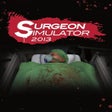
Surgeon Simulator 2013, developed by Bossa Studios, puts players in the role of Nigel Burke for darkly comic surgeries. The game maps individual finger movements to specific keyboard keys while the mouse moves and rotates the hand, creating a physics-driven challenge of organ placement and tool handling. It includes heart, kidney, and brain transplants, an Ambulance mode with a moving environment, unconventional tools, and hidden Easter eggs. Players who enjoy physics puzzles, dark comedy, and 'rage-game' difficulty are the most suitable audience.
In this game, the player controls Nigel Burke and attempts surgical transplants under a physics-driven control scheme. The challenge loop pairs individual finger input mapped to keyboard keys with mouse-driven hand movement, so simple tasks require deliberate manipulation. Success is measured by completing heart, kidney, or brain transplants without letting the patient Bob bleed out. The tone privileges dark comedy over medical accuracy.
Inside the operating room, scenarios shift between a stationary theatre and the Ambulance mode where vehicle motion scatters tools and organs. The game presents multiple procedures, from single and double transplants to an alien patient, and includes a special surgery featuring Team Fortress 2 characters. These set-piece variations change the immediate challenge rather than forming a persistent multiplayer structure or branching campaign.
On screen, presentation pairs clinical operating-room props with slapstick, darkly humorous moments created by inappropriate tools such as hammers and saws. The UI keeps controls explicit: players use A, W, E, R and Space for individual fingers while the mouse moves and rotates the hand. Sound design emphasizes comedic failure instead of realism, and visual feedback highlights collisions and dropped organs during procedures.
When starting out, players face a steep learning curve because the control scheme assigns each finger to specific keys, producing frequent accidental damage. The game intentionally abandons medical realism in favor of comedic chaos, so onboarding relies on trial and error rather than guided tutorials. Hidden Easter eggs and secret missions give players reasons to replay levels. The title's viral fame and 'Very Positive' user reception reflect its appeal among viewers and creators.
The game is a theatrical, challenge-first choice for players who enjoy laugh-driven failure and performative sessions. However, its design narrows appeal toward spectacle and communal viewing rather than accurate procedure or methodical simulation. For streamers, groups, and players who prize emergent mishaps and replayable set pieces, it suits that appetite; players seeking realistic medical simulation should expect a mismatch with their goals.
Paid
Monument Valley: Panoramic Edition brings Escher puzzles to PC

Paid
Target falling planets and space objects in this puzzle game
Paid
Explore the Puzzles of Catloaf 2600

Paid
One Move Away: Precise, minimalist move-limited puzzles on Windows

Paid
Exploring Blade Runner: Enhanced Edition

Paid
Bugsnax blends creature-collection puzzles with unexpected emotional depth