

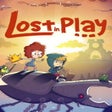
Lost in Play for Nintendo Switch
<h2>Lost in Play: a hand-drawn adventure that plays like a cartoon</h2>
- Paid
- 4.8
- V 0
<h2>Lost in Play: a hand-drawn adventure that plays like a cartoon</h2>
Lost in Play, developed by Happy Juice Games, places players inside a childlike dreamworld to guide two siblings home. The game operates as a point-and-click adventure driven by visual storytelling rather than written text. It pairs cinematic, cartoon-style presentation with pictogram cues and brief interactive sequences. The title targets families, children, and fans of nostalgic animated series who prefer compact, story-first play sessions.
Lost in Play translates sibling imagination into a puzzle-driven journey
The game is a point-and-click adventure in which protagonists Toto and Gal move between reality and surreal dreamscapes to progress. Movement and progression occur by solving tasks embedded in scenes, and the experience relies on visual expression and symbols instead of dialogue. Players encounter more than 30 distinct puzzles and mini-games, so advancement flows from discrete scene-based challenges rather than open exploration.
Puzzles and mini-games form the primary gameplay engine
Interaction centers on short, focused challenges that combine inventory-style solutions with small skill or logic tests. Examples include card games with goblins and construction tasks like assembling a flying machine. The game includes a built-in visual hint system to reduce blocking, and nonverbal cues (pictograms and gibberish vocalizations) guide players through objectives and outcomes.
The presentation leans into a "playable cartoon" aesthetic
Art and audio define the tone: cinematic hand-drawn animation gives scenes a sequential, animated feel, an approach that earned an Apple Design Award for Innovation. Encounters range from goblins to giant storks and magical frogs, and character expressions carry the story. Sound design favors expressive, nonverbal vocalizations that reinforce actions without relying on text.
Short runtime and occasional puzzle opacity shape suitable players and replay value
A typical playthrough completes in about four to five hours, which suits brief family sessions and shared play. User notes mention the experience is compact and charming, though some puzzles can be occasionally obtuse and require guidance. Players seeking extended mechanical depth or long-term progression may find the title less fitting; fans of narrative-rich, animation-forward adventures gain the most.
Lost in Play rewards shared, story-first sessions rather than extended solo grind
Lost in Play is a warm choice for families and viewers who enjoy watching and interacting with visual storytelling together; its structure invites joint problem-solving and conversation. Completionists who want lengthy systems or endless replay may prefer other offerings. For players who value crafted animation, clear pictogram cues, and a compact narrative experience, the game provides a focused, emotionally pleasant outing.
Pros
- Cinematic hand-drawn animation creates a "playable cartoon" experience
- Wordless pictogram narrative supports language-independent play
- Built-in visual hint system helps players overcome stuck puzzles
- More than 30 puzzles and mini-games offer varied short challenges
Cons
- Typical completion time is four to five hours
- Some puzzles can be occasionally obtuse and need guidance
- Limited mechanical depth for long-form progression
Lost in Play for Nintendo Switch
- Paid
- 4.8
- V 0
Top downloads

Pokémon Sword and Shield
Pokémon Sword and Shield: A New Adventure in Galar

Pokémon: Let's Go, Pikachu! and Eevee!
Revisiting Kanto with a modern twist

Pokémon Legends: Z-A
Go on a monster-filled journey
The Legend of Zelda: Breath of the Wild
Explore hyrule’s vast wilderness with unparalleled freedom

Super Mario Bros. Wonder
New gameplay for a beloved side-scroller