

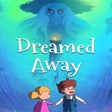
Dreamed Away for Xbox One
<h2>Dreamed Away: a 1990s Breton psychological RPG in pixel form</h2>
- Paid
- 4
- V 0
<h2>Dreamed Away: a 1990s Breton psychological RPG in pixel form</h2>
Dreamed Away, developed by Nicolas Petton, is an emotional action-adventure RPG that places a child at the centre of a dissolving summer night mystery. The game pairs exploration and environmental puzzles with encounter-based challenges to push the narrative forward and test player reflexes. Its presentation rests on 16-bit-inspired pixel art and a personal soundtrack, while branching choices shape outcomes. The title targets players who favour story-driven indie RPGs with atmospheric tension and cultural flavour.
What kind of game is it?
The game blends a personal narrative with exploratory RPG structure, sending the protagonist, Théo, through a stylised 1990s Brittany after his family disappears. Play revolves around moving through keyed locations, investigating clues, and resolving prebuilt encounters rather than random fights, which keeps story beats visible and directed. The solo development background gives the design a consistent, inward-looking tone tied to local folklore and childhood memory.
How do combat mechanics shape pacing and player attention?
Combat abandons static menus for action segments that demand timing and pattern recognition, replacing traditional turns with reflex-driven mini-games and bullet-avoidance sequences. Those sections intersperse exploration, creating bursts of tension that interrupt quieter investigation scenes. Players who enjoy brief, skill-focused encounters gain immediacy; those expecting long, menu-led battles encounter a different rhythm where success often depends on short, repeatable challenges.
What does the game look and sound like?
The presentation uses carefully composed pixel scenes to evoke rain-soaked streets and cramped catacombs, with colour choices and sprite detail that signal a 16-bit lineage without copying it outright. Ambient soundscapes and melodic pieces, produced by the developer, lean on sparse instrumentation to amplify unease. The interface keeps HUD elements minimal so environmental cues and audio carry much of the storytelling weight.
Is progression and replayability satisfying for narrative players?
Main playthroughs take about 11 to 12 hours, with completionists reaching near 20 hours through side content and alternate paths. Choices made during investigation and encounters lead to different outcomes, encouraging repeat sessions to see other resolutions. Replay value comes from branching narrative threads and handcrafted scenes rather than procedural variation, which suits players who focus on story and consequence over emergent systems.
In summary, a focused narrative experience that fits patient players
In summary, the game is a thoughtful choice for players who prefer emotionally driven, atmosphere-first RPGs and who accept short bursts of reflex demand inside a story loop. Its solo-crafted vision gives the world a consistent voice, but the emphasis on encounter-driven pacing and investigation makes it less suited to players seeking long, menu-heavy combat or high-action throughput.
Pros
- Handcrafted encounters make narrative beats explicit and discoverable
- Original music composed by the developer reinforces mood
- Branching choices produce multiple distinct endings
- Main story length about 11–12 hours, with deeper completionist options
Cons
- Reflex-based encounter design may challenge menu-RPG purists
- Focused, solitary narrative limits emergent sandbox play
- Pacing alternates sharply between quiet exploration and tense mini-games
Also available in other platforms
Dreamed Away for Xbox One
- Paid
- 4
- V 0
Top downloads
Minecraft: Java & Bedrock Edition
Mine your creativity
ROBLOX
ROBLOX: A Gaming Platform for Gamers
Watch Dogs 2
Watch Dogs 2: Open-World Action Adventure
The Walking Dead: Season Two - Episode 2: A House Divided
Intense Adventure in The Walking Dead: Season Two
The Walking Dead: Season One - Episode 2: Starved for Help
Engaging Continuation of The Walking Dead Series