Clocker for Xbox One
<h2>Time-bending puzzles that probe a fractured family bond</h2>
- Paid
- 4.9
- V 0
<h2>Time-bending puzzles that probe a fractured family bond</h2>
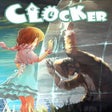
Clocker, by Wild Kid Games, is a narrative-driven puzzle about a fractured timeline and a clockmaker’s search for his daughter. Players take control of John and Alice, using a magical pocket watch to pause, reverse, or advance individual characters’ timelines to solve environmental puzzles and attempt to reunite the family. The game pairs dual protagonists and logic-based puzzles with a hand-drawn, sketchy art style that blends 2D and 3D. It targets indie puzzle fans who favor emotional, thoughtful challenges.
What kind of game is it?
In this game, the core identity is a narrative puzzle focused on family and causality. You alternate perspective between John and Alice as the story unfolds, and the design places emphasis on cause-and-effect rather than reflex play. The narrative is delivered without words, so motivation comes from scene composition and character placement. Expect deliberate problem solving where the point is to restructure events across timelines to change outcomes.
Does it offer multiple modes or perspectives?
In this game, control centers on two protagonists and precise timeline edits, not competitive or cooperative multiplayer. The mechanics let you act on individual NPC timelines with a pocket watch. Key timeline actions include:
- Pause: freeze a character or object to reposition or interact;
- Reverse: send a character backward along their prior actions;
- Advance: drive a character forward to trigger future behaviors.
These systems make each scene a logic puzzle where one change ripples through the whole tableau.
What does the game look and feel like visually?
Playing the scenes reveals a hand-drawn, sketchy art style that blends 2D illustration with 3D space. The aesthetic supports a muted, emotional tone and the storytelling relies on visual composition. The presentation is an explicit design choice to prioritize atmosphere. Some users have noted the input can be occasionally fiddly, which affects precision in tight manipulation sequences; that report comes from play impressions rather than technical specifications.
Is it hard to get started and does it keep you coming back?
Within its puzzles, complexity comes from interconnected NPC logic and non-linear solution paths. Early puzzles introduce basic timeline edits, then scenes layer multiple actors whose interactions produce emergent obstacles. Replay value arises because altering one timeline can produce alternate paths, so players can experiment to reach different resolutions. The emotional, wordless story supplies motivation to revisit scenes and test new sequences of actions.
A targeted recommendation for patient, story-oriented puzzlers
Players who prefer deliberate, logic-first puzzle sessions and a subdued, non-verbal family story get the most from this release. Those who favor fast-paced action or require highly precise input may find the interaction model less comfortable. The game suits thoughtful play sessions and emotional payoff, making it a strong match for players seeking atmosphere and mentally engaging puzzles rather than quick reflex challenges.
Pros
- Dual-protagonist narrative centered on a father–daughter relationship
- Time controls operate on individual NPC timelines for creative problem solving
- Hand-drawn sketchy art blending 2D and 3D supports a muted emotional tone
Cons
- Input precision can feel occasionally fiddly during tight sequences
- Complex, logic-heavy puzzles demand sustained concentration
- Wordless narrative may frustrate players who prefer explicit exposition
Also available in other platforms
Clocker for Xbox One
- Paid
- 4.9
- V 0