





4
Paid
Deck Remover
An extraordinary card game


Safe & trusted downloads
The best software, verified by experts
<h2>Card Shark makes eighteenth-century cheating into tense narrative play</h2>
Card Shark, from Nerial, places players in 18th-century France as a mute tavern assistant recruited into high-stakes cons against the aristocracy. The game teaches sleight-of-hand and staged scams through a campaign of escalating encounters, asking players to balance precision, short-term recall, and social risk. It pairs mini-game mechanics with a distinct printed-art aesthetic that treats each table like a staged performance. Players who prefer narrative experiments, historical settings, and precision-based puzzles find a focused, investigative single-player experience.
You answer to the Comte de Saint-Germain and progress from small parlours to the King's table while a conspiracy threads the campaign. The mute protagonist forces the player to read opponents through behaviour and staging rather than dialogue, so motivation and discovery happen at the table. In-world consequences include being expelled from a parlor, imprisonment, or death, which turns each encounter into a tense social wager with narrative weight.
Gameplay maps cheating techniques onto tight micro-interactions: peeks, false shuffles, signalling, and deck manipulation appear as discrete actions that require precise rhythm and recall. Players must manage a suspicion system that rises with errors, measuring speed against careful execution. On PC the title supports controllers and maps sleight sequences to inputs, so mechanical dexterity and observational timing are core player skills rather than abstract statistics.
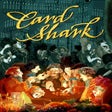
The visual approach draws on monotype printing and cites Nicolai Troshinsky's work, producing a "living painting" feeling that frames social encounters as tableaux. An original orchestral score by Andrea Boccadoro underscores tension and timing, shading small gestures with dramatic weight. This presentation differentiates the title from typical card-themed releases by making lighting, composition, and sound part of the communicative surface you must read.
A progressive difficulty curve raises trick complexity as you ascend social ranks, and the package includes roughly 28 distinct cheating strategies to learn and refine. Replay value comes from mastering those techniques and approaching tables with alternative timing choices. The developer known for Reigns applies narrative pacing to social risk. Some players report steep difficulty spikes in later encounters, so the experience favors focused practice over casual drop-in sessions.
In summary, the game is a measured, player-facing experiment that rewards careful observation and repeated practice, making it best for players who enjoy learning mechanical crafts and reading social cues. It is less suitable for those seeking immediate, casual diversion or simple rule-based card play. The experience favors focused sessions and patience over quick thrills, offering a tone-driven alternative to conventional simulations.
Paid
An extraordinary card game

Paid
Cool Game for Card Lovers

Paid
A chaotic journey through purgatory

Paid
A new challenger in the card arena

Paid
Popular Card Game for Personal Computers and Mobile Devices