

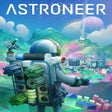
Astroneer for Xbox Series X|S
<h2>Astroneer on Xbox Series X|S: Creative planetary exploration and basecraft</h2>
- Paid
- 4.7
- V 0
<h2>Astroneer on Xbox Series X|S: Creative planetary exploration and basecraft</h2>
Astroneer, from System Era Softworks, is a sandbox exploration simulation set in the 25th-century Age of Discovery, placing you in the role of an Astroneer who scouts alien worlds. The game focuses on planetary exploration, resource collection, and constructing functional bases across separate celestial bodies, playable solo or with companions. Core systems emphasize environmental shaping, modular construction, vehicle engineering, and resource processing. It targets creative players who prefer non-combative, engineering-centered sessions and cooperative base-building.
How does Astroneer sit alongside block-building sandbox titles?
Rather than matching block-by-block crafting, the game frames play as systems design and exploration. Its sculpting tools let you alter landscapes to solve traversal and logistic problems, guiding a progression that rewards equipment upgrades and site discovery. Survival pressure is described as soft and focused on supply management instead of combat, which shifts engagement toward planning and iterative engineering rather than reflex-driven encounters.
Does it support multiplayer, cross-play, and solo modes?
The developer offers flexible session types: a full single-player offline mode exists alongside online cooperative play for up to four participants. Cross-play is available between Xbox and PC when using the Microsoft Store edition, while other platforms depend on dedicated servers for cross-platform sessions. Cooperative sessions change pacing, accelerating complex builds and exploration when teammates coordinate resource runs and base expansion tasks.
What does the game look and sound like?
The title uses a vibrant low-poly art direction that keeps environments readable and distinctive at range, producing a whimsical sci-fi tone. Ambient audio and mechanical cues underline hazardous conditions and active machinery, aiding navigation. Construction employs a snap-to-grid modular interface so structures, production chains, and vehicle assemblies align cleanly, which simplifies large builds while enabling layered automation and transport customization.
Is progression approachable, and what keeps you returning?
Progression emphasizes experimentation: players extract, refine, and combine materials to unlock new equipment and production setups, then test configurations across varied locations. Replay value flows from optimizing automated production lines, crafting specialized transport, and exploring distinct planetary biomes. The developer maintains regular content updates and community engagement, though sources note a learning curve and occasional performance strain in large multiplayer sessions under heavy load.
In summary, Astroneer suits builders and experimenters rather than action seekers
Astroneer is a contemplative choice for creative builders and logistics-minded players who prefer exploratory, non-combative sessions. The developer's focus on engineering systems and base-scale problem solving rewards patience and iterative design. Players seeking fast-paced action may find the pace deliberate, and the learning curve requires time. For those who value open-ended construction and planetary discovery, the game delivers a durable sandbox to experiment in.
Pros
- Voxel-based terrain tools enable sculpting and large-scale environmental changes
- Low-poly, vibrant visuals make distant landmarks legible
- Offline single-player plus online co-op for up to four players
- Modular construction supports automated production lines and complex bases
Cons
- Steep learning curve for advanced engineering and logistics systems
- Performance can strain during large-scale multiplayer or high-load bases
- Cross-play limited to Xbox and Microsoft Store PC editions
Also available in other platforms
Astroneer for Xbox Series X|S
- Paid
- 4.7
- V 0
Top downloads

Split Fiction
A one-of-a-kind co-op action-adventure game from the team behind It Takes Two
Minecraft: Java & Bedrock Edition
Mine your creativity

over the hill
Explore the Wilderness in Over the Hill

I Am Fish
The ocean beckons you in this challenging game

Garten of Banban
Explore the Mysteries of Garten of Banban