
3.6
Free
3D Canvas
Fine tune your 3D modeling skills with this complete program

Safe & trusted downloads
The best software, verified by experts
<h2>Java 3D studio for procedural materials and organic modeling</h2>
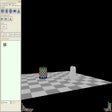
Art of Illusion, developed by Peter Eastman, is a Java-based 3D studio for modeling, rendering, and animation that helps creators produce stills and motion. The app combines a node-like material editor and polygon and spline modeling tools with animation controls. It targets learners and makers who want an approachable learning environment alongside deeper editing controls. Educators and hobbyists gain a practical 3D workspace suitable for study and presentation work.
The tool is a scene-level 3D studio focused on model creation, material design, and animated output. Its modeling approach centers on subdivision surface techniques for smooth organic shapes and supports several object types for construction. The package pairs geometric editing with a visual material composer so artists can move from shape to shaded image inside a single environment, keeping modeling and look development in one flow.
The program includes export paths that suit both presentation and fabrication workflows. Notably, it can export models in STL, which makes it usable for 3D printing, and it handles common scene object types such as:
Those export and object options let creators move from prototype to physical or rendered output without format conversion workarounds.
Animation tools are anchored in a skeleton-based system that offers both forward and inverse kinematics and pose-based keyframing. The timeline and rigging controls let users test deformations and refine motion inside the same project file. Scripting support through BeanShell gives repeatable scene setup and batch operations for users who automate repetitive tasks, which helps iterative design and classroom assignments.
The app ships with an integrated raytracer capable of producing photorealistic renders using global illumination and soft shadows, so final images can match common presentation standards. The material editor uses a graphical language for procedural textures, permitting complex surfaces without hand-coding. That combination gives creators direct control over surface detail and light interaction, which matters when preparing visuals for critique or portfolio work.
Started in 1999 under Peter Eastman and maintained as an open-source project, this software occupies a niche as a learning laboratory and creative sandbox for students and independent artists. Although extension and tutorial quality depend on community contributions, the project's longevity and open development model make it valuable for hands-on experimentation and classroom use, particularly where source access and modifiability matter.
Free
Fine tune your 3D modeling skills with this complete program
Free
Sculptris: User-Friendly 3D Modeling Software

Free
Explore Creative Possibilities with DAZ Studio

Free
Free Software for Model Makers
Free
A Free Design & photography program for Windows

Free
This tool offers powerful 3D modeling control

Open-source desktop publishing app
GIMPShop: A Free Alternative to Photoshop

Skysoft DRM Removal is all-In-One software which provides you...
Super-simple panorama creation
A Trial version Design & photography program for Windows
3D fonts and logos with tons of different effects
Free Video utility to help you to cut and split your video files....
Powerful photo editor and digital art tool
Complete paint package for creating and editing images or animations

A free app for Windows, by technia-gmbh.

Avatars+ Anime Maker